
Elves don’t care about you. Neither do fairies, extra-terrestrials, or outer gods. You, human, are not important to them. To them you may be a curiosity, an obstacle or inconvenience, a tool or resource, a collectible or trophy. But if Fantastic Others are truly other, then they have no shared humanity with you, minimal shared perspective with you, and too little sympathy with you to care about you as a person.
A good example of this principle is the short story “They’re Made out of Meat” by Terry Bisson. Extra-terrestrial aliens have picked up signals from Earth asking for communication with any intelligent life. The aliens are shocked to discover that the beings sending these signals are made out of meat. After discussing the absurdity of lonely meat, the aliens agree that to interact with meat people is out of the question. They decide to pretend they never detected any signals from Earth. This story is entertaining, yes, but also challenging. It requires readers to look at themselves from a foreign perspective and to see themselves as uninteresting, even disgusting. It offers an alternative to the egotistic theory that, because humans haven’t found other intelligent life, humans must therefore be the only intelligent life. Instead of humans’ being the best, the pinnacle, the default, the only, perhaps we’re the dorky kids all the other kids in the galaxy ignore. As the story insults humans, it opens up exciting possibilities for countless forms of intelligent life and personhood. When fantastic stories reveal such possibilities, they rarely do so without the insult,[i] because, by definition, these possibilities challenge the primacy of humans.
There are two broad exceptions to the rule that Fantastic Others don’t care about humans. The first is in-story — the story indicates, explicitly or strongly implicitly, that Fantastic Others are not entirely nonhuman. The second is out-of-story — Fantastic Others function largely as narcissistic human projections. Both of these reasons boil down to un-othering Fantastic Others.
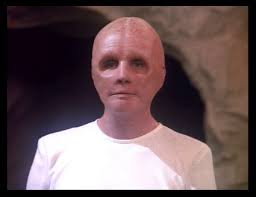
The most notable example of Exception No. 1 is the Star Trek franchise, in which many extra-terrestrials befriend humans, join a Federation with them, and work with them toward common goals. When Star Trek aliens oppose humans, they do so in typically human ways – bigotry, political jockeying, war. Many of the devices (both technological and otherwise) in Star Trek minimize the otherness of aliens. There’s the real-time universal translator to overcome language barriers. There’s the surprising regularity with which aliens live on planets with gravity and atmosphere similar to Earth’s, making it easy for humans and aliens to work together on one starship. And the visible differences between humans and aliens are almost always superficial, such as skin color and markings or protuberances on the face. (The obligatory “forehead makeup” for aliens is a joke among Star Trek fans and critics.) Most of these could be justified as unfortunate necessities for a television show with human actors and a limited budget. Perhaps the writers recognized the absurdity of so many aliens so similar to humans and felt the need for an in-story explanation. So in Star Trek: The Next Generation Episode 146, “The Chase”, we learn that the Alpha Quadrant of the galaxy (where the Federation is based) had been seeded long ago with genetic material from a progenitor humanoid species. All humanoid species have derived from that material. Thus, the most prominent Star Trek aliens are not truly other; they are distant genetic cousins to humans. The hope at the end of “The Chase”, that Romulans and the Federation may one day have lasting peace, rests on an undoing of the otherness of aliens.[ii]
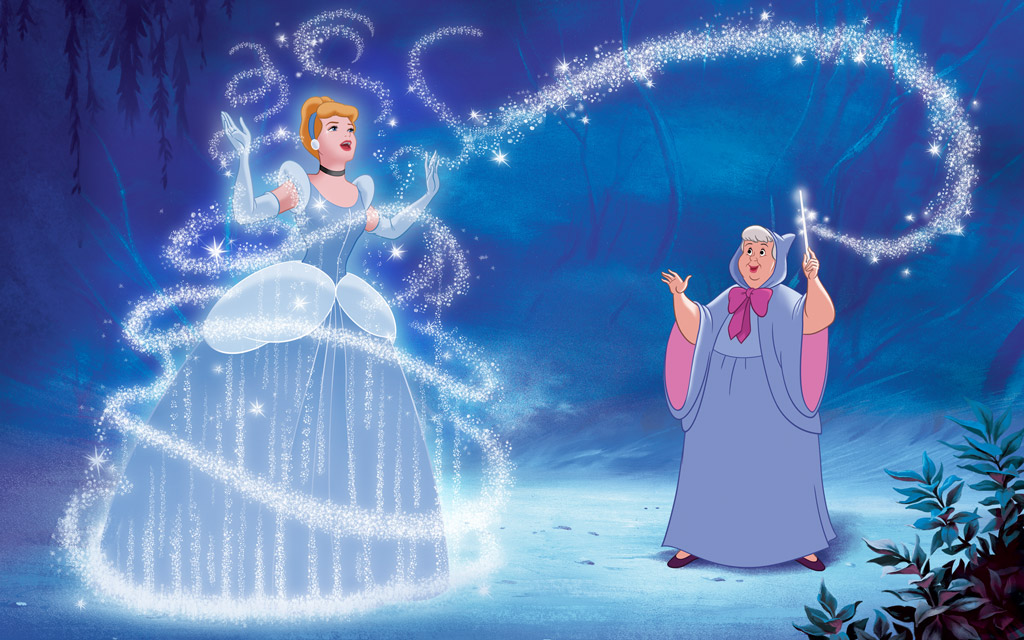
A common example of Exception No. 2 is the helpful-fairy character (or helpful-fantastic-being character). The helpful fairy, often a parental figure, provides aid or knowledge during a protagonist’s quest. Note that protagonists who deal with helpful fairies are almost invariably children or adolescents. Examples include Cinderella and Sleeping Beauty with their fairy godmothers, Peter Pan with Tinkerbell,[iii] young Arthur mentored by Merlin (Merlin becomes less prominent in the stories as Arthur ages), Tristran Thorn from Neil Gaiman’s Stardust (his mother, who gives him the magical tools for his quest, is a princess of Faerie). The helpful fairy is a product of childish narcissism. Children haven’t learned to de-center themselves in their conception of the universe, so it is not surprising that they would imagine they are important even to Fantastic Others. Note the similarity of helpful fairies to the adults children have most dealings with – parents, teachers, mentors. These adults are knowledgeable and powerful (in comparison to children) and have specific duties of care to children. It makes sense that stories about childhood and coming of age would feature helpful characters like nurturing adults but with greater power to wield on the protagonists’ behalf.
Stories with helpful fairies provide consolation and psychic wish fulfillment. Most of us would like the universe to be more sympathetic to us; the helpful fairy fulfills this wish. The fairy (god)mother takes the place of a dead, estranged, antagonistic, uncooperative, or boring mother. Maybe your mom won’t get you a fancy dress for the ball, but your fairy godmother will. Maybe your parents raised you in a town with few prospects, but your fairy mother is a princess, and that makes you a prince. These are the mothers you wish you had. This is the universe you wish you lived in.
Adults can and do enjoy stories of wish-fulfillment, but they usually experience less consolation, because of adult cynicism. Cynicism is the adult form of childish narcissism. While children imagine a universe that helps and sympathizes with them, adults imagine a universe out to get them. Children imagine themselves as questing heroes with magical helpers; adults imagine themselves as Wile E. Coyote, thwarted by the universe in all their efforts. Helpful fairies are the products of childish narcissism. Fantastic beings with direct malice toward humans are the products of cynical adult narcissism. In both cases, the fantastic being is too interested in human affairs to be truly other.
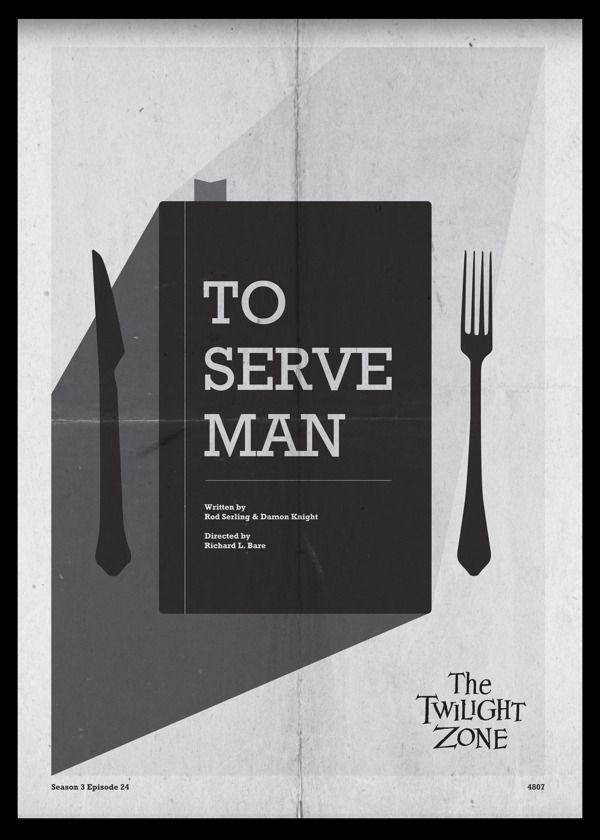
One subgenre that regularly focuses on the Fantastic Other’s lack of care for humans is sci-fi horror. Yes, some of the monsters in this subgenre have a vestige of humanity (e.g., vampires) and/or direct malice toward humans. But often, and more horrifically, the monsters don’t care about us enough to consider the harm they cause us. H.P. Lovecraft’s ancient alien deities take little notice of humans; still their visible forms are so other as to drive humans mad. Their very existence threatens us. Frequently in sci-fi horror, the Fantastic Other sees humans as resources to be exploited. In the Twilight Zone episode “People are Alike All Over”, aliens seem at first to befriend the human protagonist, but finally they confine him in a zoological exhibit. In another episode, “To Serve Man”, aliens offer to share advanced technology with Earth out of friendship, they claim. Humans even find an alien book titled “To Serve Man”, an apparent indication of the aliens’ wish to help humans. But as some humans are leaving to visit the aliens’ home planet, a translator discovers that “To Serve Man” is a cookbook. The visiting humans will be eaten. In both episodes, humans are initially suspicious of aliens, then are convinced the aliens wish to be kind to them, and finally learn that the aliens intend to use them. The horror lies in realizing that one has been duped by the lie of childish narcissism, the lie that Fantastic Others sympathize with you.
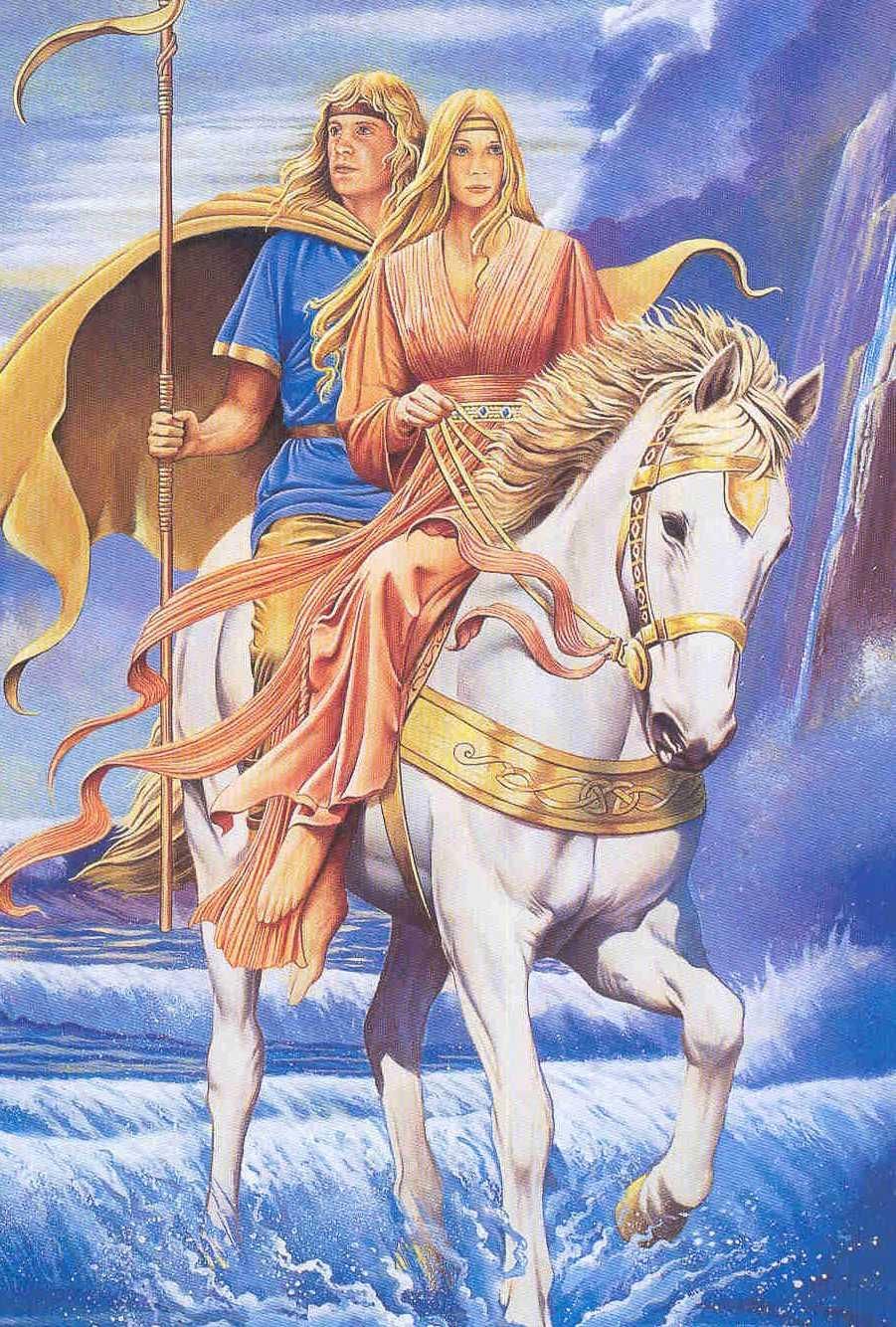
There are certainly stories in which a Fantastic Other is said to love a human, and not all of these stories are about children or directed toward children. These stories work best, (i.e., they manage not to un-other the Fantastic Other) when the Fantastic Other’s love is strange, when she acts otherwise than a human in love would act. For example, in Irish mythology, a woman from the Otherworld, Niamh, falls in love with the human Oisín and takes him on a magical horse to live in the Otherworld for three years. She then reluctantly allows Oisín to visit his country on the magical horse, cautioning him not to dismount. Oisín finds that three hundred years have passed in his country, and, shocked, he falls to the ground. Immediately he ages 300 years and dies. Niamh can be said to care about Oisín, but she doesn’t warn him about the otherness of time in the Otherworld. She doesn’t care or doesn’t understand or doesn’t take into account how he will feel about outliving all his family and friends, about missing the important happenings in his native land. Thus she remains other.
Perhaps the best articulation of the otherness of a Fantastic Other, even one who is said to care about humans, comes from C.S. Lewis’s The Lion, the Witch, and the Wardrobe. It is likely a surprise that I would use this story as an example, given the ways in which it flatters childish narcissism and supports human primacy. The human children protagonists receive aid from many fantastic beings, and humans are destined to rule the fantastic realm of Narnia. However, one fantastic character is more important than the protagonists – Aslan the Lion, Son of the Emperor-over-the-Sea, King above all (human) high kings in Narnia. Although Aslan cares for the human children (he cares for all the fantastic beings in Narnia, as well), he “isn’t safe. [. . .] He’s wild, you know. Not like a tame lion”. Unsafe. Wild. Not tame. These words describe forces that humans do not control. And when these forces are personified but not humanized, they become Fantastic Others.[iv]
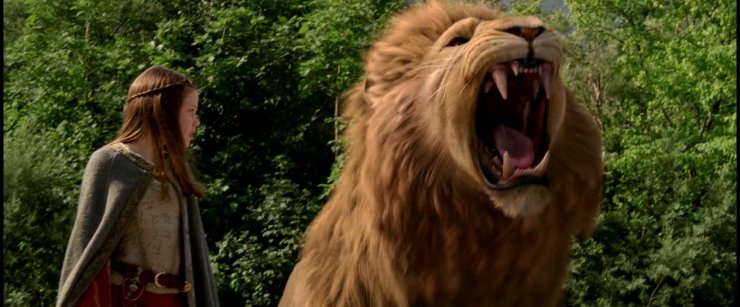
“Not tame” is precisely what I mean when I say elves don’t care about you. To tame an animal is to make it act not as it would by nature, since that isn’t convenient for humans, but as humans would like it to act. Likewise, when a storyteller makes her elves act the way humans would like them to act, rather than having them act according to a genuinely other nature, she has tamed them for her audience’s comfort. Sadly, that is precisely what happened in the 2002 film The Lord of the Rings: The Two Towers.
In J.R.R. Tolkien’s novel, only one elf fights at the Battle of Helm’s Deep, a battle between orcs and the human kingdom of Rohan. The rest of the elves of Middle Earth are busy fighting their own battles against orc armies. Tolkien’s elves, though opposed to the same evil that threatens Rohan, do not care enough about humans to take on risk for them. These elves, though not invulnerable, are immortal. If they do not die from violence, they will likely live forever. It is inevitable for humans to die, but it is tragic for an immortal elf to die. Rohan is not an old kingdom. It is approximately 500 years old at the time of the Battle of Helm’s Deep. In contrast, the elf leaders Elrond and Galadriel are, respectively, over 6000 years old and over 8000 years old. They would not consider this upstart kingdom important. Also, per the Tolkien mythos, elves are wary of allying with humans, because human mortality means succeeding generations are prone to forget the lessons of the past and to be seduced by the same evil their fathers fought. For these reasons, it makes sense for elves to conserve their forces and not to intervene on behalf of Rohan.
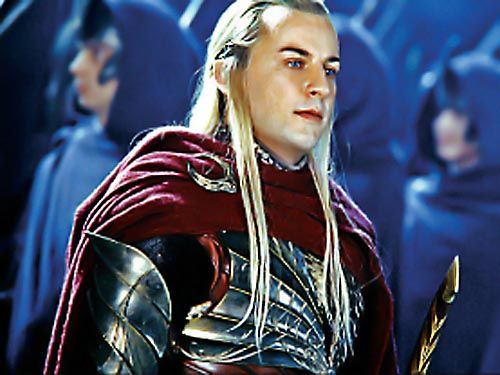
The film, however, tames the elves, making them care enough about Rohan to send an army to fight and die for them. This change has been justified as making the elves less “snooty” and more “likeable”. Certainly it appeals to an audience of humans who want to be important to the universe. But in trying to appeal, the film writers do not allow elves to act according to their long-lived, long-memoried, nonhuman nature.
The in-story reason for elves at Helm’s Deep, as stated in the film by the elf Haldir, is: “An Alliance once existed between elves and men. Long ago we fought and died together. We come to honor that allegiance.” This line greatly simplifies the complicated relations between elves and humans in Tolkien’s writings. The Last Alliance between elves and men did not include all humans, only the human kingdoms of Gondor and Arnor. The royal lines of Gondor and Arnor descend from Elros, brother of Elrond. If Elrond should choose to honor an old alliance with humans, he would send elves to fight for Gondor, not for Gondor’s young vassal state Rohan, to whom he has no allegiance and no tie of blood.
Admittedly, most audiences will not enjoy a story with characters too
strange to be appealing. Fantastic Others should not always be relegated
to the villain role, as they so often are in sci-fi horror. But neither
should they be only superficially other, only humans with accents and pointy ears.
Fantastic stories ought not merely flatter their audiences’ egos by making the
universe revolve around them or reflect their own image back to them. Fantastic
stories should question and challenge human assumptions in order to offer new
perspectives and reveal new possibilities. That is why you need elves not
to care about you.
[i] For example, in the children’s book My Teacher Glows in the Dark, a crystalline alien laments that carbon-based life-forms (including humans) think carbon is the only way to live.
[ii] This un-othering hearkens back to the original Star Trek interspecies friendship between the human Captain Kirk and the Vulcan Spock. Spock is not fully Vulcan but half-human.
[iii] J.M. Barrie’s Peter Pan is more conscious of its protagonist’s childish narcissism than the other stories I’ve listed. Peter wants Wendy to be his mother, and when Wendy wants a different (i.e., romantic) relationship, Peter speaks his frustration that Tinkerbell, too, wants to be something to him other than a mother.
[iv] It would take an entire post on its own to discuss the relationship between the fantastic and the Christian in The Chronicles of Narnia. Yes, Aslan is correctly understood as a Christ figure, but, Lewis argued, not allegorically, rather suppositionally: “If Aslan represented the immaterial Deity in the same way in which Giant Despair [a character in the allegory The Pilgrim’s Progress] represents despair, he would be an allegorical figure. In reality, however, he is an invention giving an imaginary answer to the question, ‘What might Christ become like if there really were a world like Narnia, and He chose to be incarnate and die and rise again in that world as He actually has done in ours?’ This is not allegory at all” (Martindale, Wayne; Root, Jerry. The Quotable Lewis). Lewis seems to have considered his Narnia stories more akin to speculative fiction than to allegory, though the difference may not be obvious to readers. As to the question my post addresses, whether Aslan is truly other or a narcissistic human projection, that depends on what one believes about the Christian God. If God is made up in order to console humans for the universe’s lack of care for them, then so is Aslan. But one can also understand the Christian God as a true other, as a personal being with motives and morals very different from those of humans. Many of the criticisms of Christianity come from human disputes with the apparent morality of God, e.g., the problem of evil – why a good and sovereign God would allow evil to exist at all. Yes, Christianity claims that God saved humans from evil, but would it not have been more caring, from a human perspective, for God to have kept humans safe from evil to begin with rather than allowing them to be in danger and to need saving? Many of Jesus’s teachings are phrased as opposing human codes of morality, e.g., “Ye have heard that it hath been said, Thou shalt love thy neighbour, and hate thine enemy. But I say unto you, Love your enemies, bless them that curse you, do good to them that hate you, and pray for them which despitefully use you, and persecute you; That ye may be the children of your Father which is in heaven: for he maketh his sun to rise on the evil and on the good, and sendeth rain on the just and on the unjust” (Matt 5:43-45). Jesus is not conforming to the wishes of the people he is addressing; rather he is asking them to conform to a new, other moral code, that of the Father in heaven who acts seemingly without regard to good and evil, just and unjust. This footnote is already too long, though still inadequate. But consider whether Christ’s and Aslan’s love for humans is sufficiently different than humans would expect to qualify Christ and Aslan as Others.

 Fantastica
Can’t wait to read more!
LikeLiked by 1 person
Can’t wait to read more of this!
LikeLiked by 1 person
I love Peter Pan as an example here, because in the novel, Pan is a terrifying monster of a character beneath all his charm and whimsy. Yes, he cares about humans–as playmates and playthings. But he’s not able to distinguish between humans very successfully; he can’t remember his conversations with them; if I recall correctly, near the end of the book he refers to another child as “Wendy” (although I may be confusing some riff on the original story with the original itself).
He’s a god of childhood, but not a benevolent god, as childhood is not benevolent.
LikeLiked by 1 person
Yes, excellent points. I have always said that _Peter Pan_ the novel (and the original Barrie play _Peter and Wendy_) is great fun when one is a child and very sad when one is an adult. I used Pan as an example of the narcissistic human child whose narcissism is flattered by the care and aid of the fairy Tinkerbell. But you’re right to note that Pan is also somewhat other in comparison to the human Darling children. Pan doesn’t come of age. He will never set aside childish self-centeredness. He never learns to consider other people to be as important as himself. (Hence Wendy learns not to bother to point out to him when, after she agrees to join him in Neverland once a year for spring cleaning, he forgets a year or two or more. It’s during one of Pan’s long absences that Wendy grows up.) The difference between the Darling children and Pan is not as great as the differences between humans and Fantastic Others, but that difference is intriguing and even educational in a similar way. The exciting possibility revealed by Pan is the possibility of eternal youth and narcissism, and that is contrasted with the skepticism of the adult Hook, always thwarted, as well as his flight from his own mortality (the crocodile that ticks away the seconds of Hook’s life).
LikeLike