
Elves don’t care about you, and neither does the Goblin King. But I’m getting ahead of myself.
In my last post (I recommend you check out Part 1 first), I made a distinction between Fantastic Others who are really other, who act according to a well-developed nonhuman nature, and fantastic characters who are too interested in human affairs to be really other. Most of my example stories offer only one type of fantastic character, not both. Here I will consider the differences between true and false[i] Fantastic Others within one work – Jim Henson’s 1986 film Labyrinth.
In this coming-of-age film, the teenage human protagonist Sarah rashly wishes that goblins would take away her crying baby brother, whom she is babysitting. When the Goblin King Jareth grants her wish and will not let her take it back, she must make her way through a fantastic labyrinth to the Goblin King’s castle to rescue her brother before he becomes a goblin.
Sarah finds herself alone just outside the labyrinth, and she sees a dwarf spraying small flying fairies as if with insecticide. Horrified, Sarah chides the dwarf and sympathetically takes one of the fallen fairies in her hand. She then cries out in pain, drops the fairy, and says in disbelief, “It bit me!” The dwarf replies, “What did you expect fairies to do?” She answers, “I thought they did nice things, like – like granting wishes.” “Shows what you know, don’t it?”, says the dwarf. And he’s right. Sarah doesn’t know anything about fairies. Although the fairy has a tiny woman form, it is not human. It either doesn’t understand or doesn’t care that Sarah wants to help. It reacts to Sarah’s sympathetic hand not as a human but as a bug (thereby justifying the actions of the dwarf in spraying it). This fairy, unlike the helpful fairies in many children’s stories, is truly other.
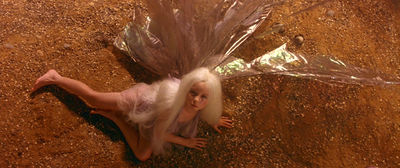
This introduction to the other realm should put Sarah on notice that fantastic creatures operate on different rules than those she knows or wishes were true. (Indeed, the clockface in the other realm shows not twelve but thirteen hours.) Yet she complains repeatedly during her quest, “It’s not fair”, until at last the Goblin King comments, “You say that so often. I wonder what your basis for comparison is.” Her basis for comparison is the world she knows, a world populated with fellow humans who understand her sense of fairness, some of whom even allow her to center her desires unfairly. During her brief on-screen interactions with her father and stepmother, we see that they are more than fair with her, that her stepmother only moderately reprimands her for being late to babysit her brother. Before either parent says anything to Sarah, her first words are, “Oh, it’s not fair!”, and she plays the put-upon victim for having to cut short her time playing dress-up with her dog in the park. Sarah seems to consider it not fair for anyone else to inconvenience her. She is surprised that a fairy wouldn’t be “nice” to her. A dose of being unimportant is exactly what Sarah requires in order to grow up.
But Sarah is not unimportant to every creature she meets in the other realm. She befriends and receives help from Hoggle the dwarf, the monstrous Ludo, and Sir Didymus, an anthropomorphic fox. Ludo and Didymus are as uncomplicatedly helpful as any fairy godmother, while Hoggle struggles with divided loyalty, friendship for Sarah and fear of the Goblin King. His fear causes him once to betray Sarah and other times to leave her in danger, but he regrets doing so, returns to help her, and shows constant concern for her. The first time he rescues Sarah, she asks, “Why are you so concerned about me?”, and he responds, “Well, I am. That’s all.” It’s his concern that is inexplicable, not his cowardice. Hoggle’s cowardice adds suspense to the story, but it’s an understandable human motivation. It doesn’t make him other, and it doesn’t change that he cares about Sarah.
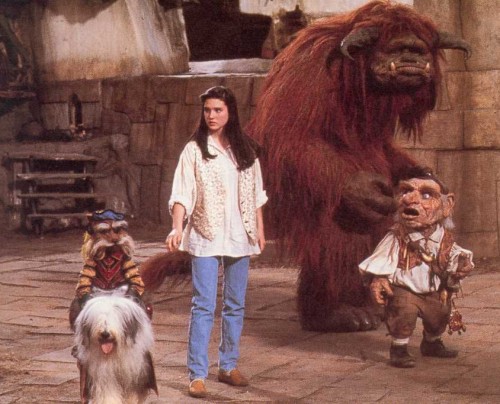
Most stories with helpful fantastic characters do not admit that these characters are products of human narcissism, that they are created to console humans with the fantasy that the universe cares about them. But a careful viewer may note that Hoggle, Didymus, and Ludo are represented as toys in the shot of Sarah’s bedroom. The toy representations indicate that these creatures are born in Sarah’s imagination and are not native inhabitants of the other realm. They are the comforting imaginings of an adolescent who doubts her ability to make it through a dangerous world on her own (even the familiar world). This understanding of Hoggle, Didymus, and Ludo makes sense of their conversation with Sarah before her final confrontation with the Goblin King. She insists on facing him alone, i.e., as an adult who doesn’t rely on the childish comforts of toys and imaginary friends. (Throughout her quest, the Goblin King has tried to distract her by sending her back to play with her toys.) When they offer, “Should you need us”, Sarah answers, “I’ll call”. Later, when Sarah returns to the familiar world, she hears the echo of “Should you need us” and answers, “I don’t know why, but every now and again in my life, for no reason at all, I need you, all of you.” Sarah can’t admit the reason even to herself. She has taken a big step toward growing up, learning not to resent her brother when his and the family’s needs inconvenience her, but she hasn’t finished. She will face other coming-of-age struggles in which she will still need the comfort and strength of her imagined friendly helpers.
What, then, do we make of the Goblin King, played by David Bowie? (No question that Bowie is a magical being from an other realm, but we’re considering only the character he plays.) Like Hoggle, Didymus, and Ludo, the Goblin King is represented as a toy in Sarah’s bedroom. Like them he is imagined by Sarah. When we first see Sarah, she is in costume and reciting lines, from a book, addressed to (we later learn) the Goblin King: “Through dangers untold and hardships unnumbered, I have fought my way here to the castle beyond the goblin city to take back the child that you have stolen”. Later, when Sarah consoles herself for having to babysit her crying brother, she tells a story about the Goblin King, that the Goblin King has fallen in love with her and will take away her brother if she only speaks a precisely worded wish. Given just this information, especially that the Goblin King loves Sarah, it would seem that the Goblin King is as much one of her narcissistic imaginings as are her friendly helpers.
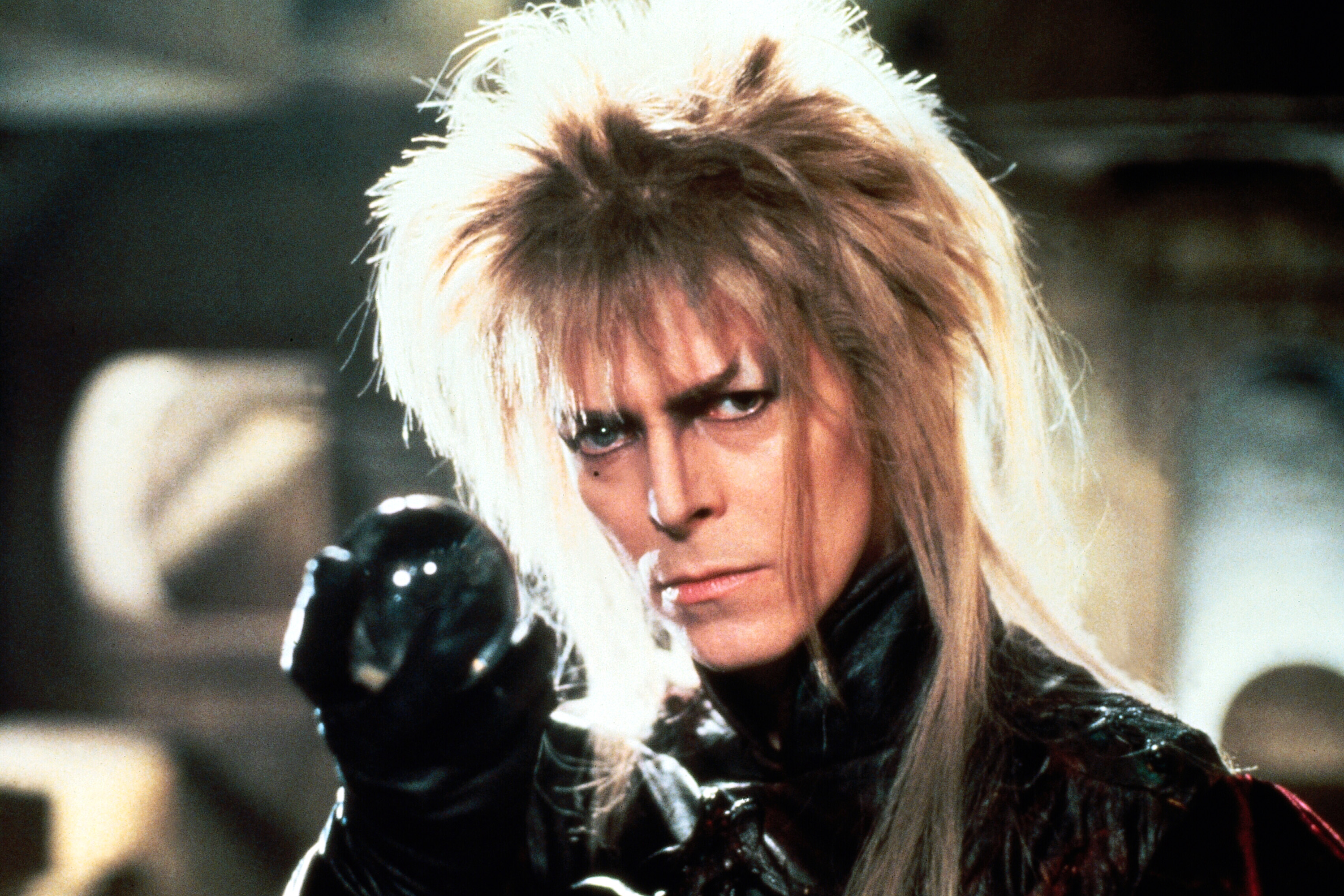
But there is still an unmistakable quality of the Other about the Goblin King. He does not conform to and is not contained by Sarah’s story. For one thing, he has a name, Jareth, that Sarah never uses and doesn’t seem to have given to him. (Only Hoggle refers to the Goblin King as Jareth. The Goblin King once comments about the stolen baby, “I think I’ll call him Jareth”.)
While Sarah claims the Goblin King has fallen in love with her, he never tells her that he loves her, and he certainly doesn’t try to please her. His primary interest throughout the film is to get and to keep her brother from her. He does grant her wish (a “nice” action Sarah expects from fairies), but it is a rash wish that Sarah tries to recall as soon as he grants it. A trick bargain like this is a common device of Fantastic Others; they exploit the discrepancy between what humans say and what they really want.[ii] The Goblin King has his own reason for taking Sarah’s brother, i.e., that the boy will eventually become a goblin, “one of us”. There is no need to invoke love as a reason for any of the Goblin King’s actions. Indeed, if he should love Sarah in anything like a human way, then his actions would make no sense. A besotted Jareth would want to keep Sarah rather than her brother. He would not order Sarah to give up, to “Go back to your room. Play with your toys and your costumes”. A Goblin King who loves Sarah in anything like a human way would not seek to harm her. Yet Jareth himself, to say nothing of his minions in the labyrinth, puts Sarah in many kinds of peril, from the laughable – the Bog of Eternal Stench – to the acutely deadly – “the cleaners”, goblins who chase Sarah with a large, bladed drill. These threats cause Hoggle to say, “The cleaners! The Bog of Stench! You sure got his attention!” Sarah would already have Jareth’s attention if he loved her. But if a human attracts the attention of a Fantastic Other like the Goblin King, that attention is usually dangerous. The Goblin King endangers Sarah not because he has particular malice (nor love) toward her but because she is an obstacle to his plan. Otherwise he would take no notice of her.
Jareth is undeniably seductive in his interactions with Sarah, but he wishes to distract her from her quest rather than to romance her. Like a lover offering jewelry, he presents her with a crystal to show her her dreams. “But”, he says, “this is no gift for an ordinary girl who takes care of a screaming baby.” Sarah must refuse it in order to seek her brother. After Sarah eats a drugged peach, she dreams that she is at a ball dancing with Jareth. The dream may be purely her own fantasy, or it may be another attempt by Jareth to keep her distracted. As long as she’s dreaming and dancing, she isn’t seeking her brother. At their final confrontation, when Sarah has made it to the castle to save her brother, the Goblin King, desperate to keep the boy, becomes his most seductive. To delay and distract Sarah from saying the line that will defeat him (“You have no power over me”), Jareth claims, “Everything that you wanted I have done. You asked that child be taken; I took him. You cowered before me; I was frightening. I have reordered time. I have turned the world upside down. And I have done it all for you. I am exhausted from living up to your expectations of me. Isn’t that generous?” Of course, if Jareth were generous in anything like a human way, he would have returned the child when Sarah asked. He may have acted “for” Sarah in frightening her, setting her thirteen hours to solve the labyrinth, and hiding her brother in an Escher-style room, but he has acted to thwart her rather than to benefit her. As with her rash wish for the goblins to take her brother, Sarah didn’t really want Jareth to do any of those things. The Goblin King is quite willing to seduce Sarah with his power and charisma, but his motive is only to keep the baby. From Sarah he wants only submission: “Just let me rule you, and you can have everything that you want. [. . .] Just fear me, love me, do as I say, and I will be your slave.”
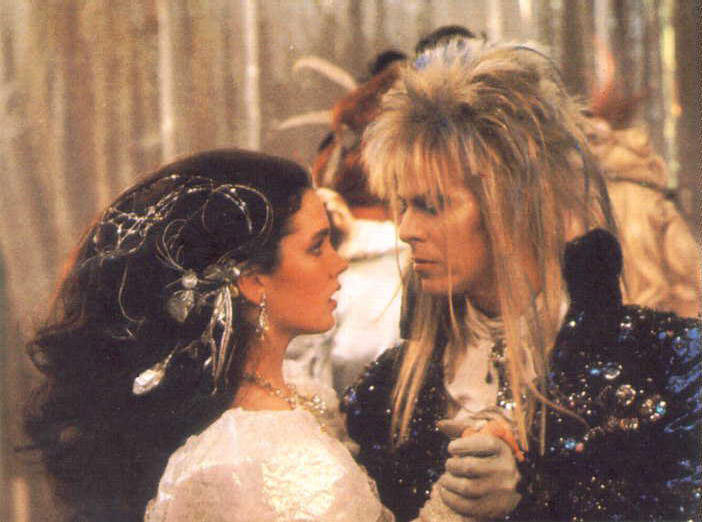
The best evidence that Jareth loves Sarah, or at least has a romantic interest in her, is the David Bowie song that plays during their dream dance. In Bowie’s voice, the voice of the Goblin King, Sarah and the audience hear: “I’ll paint you mornings of gold. I’ll spin you Valentine evenings. Though we’re strangers till now, we’re choosing a path between the stars. I’ll lay my love between the stars.” These lines come very close to an “I love you”. But note that while David Bowie is singing, the Goblin King is not. Jareth’s lips do not form a single word of the song. When we consider that Jareth does sing both of the other songs for which he is present on screen, “Magic Dance” and “Within You”, we can see that his failure to sing here is significant. The words we and Sarah hear are not the Goblin King’s words, so they do not express any love from him.
As for “Within You”, the song Jareth sings during his final confrontation with Sarah, although it is seductive, it is not caring. It begins, “How you turn my world, you precious thing. You starve and near-exhaust me. Everything I’ve done I’ve done for you. I move the stars for no one.” Only the first line can be said to show admiration. But “precious thing” could, given the context of the film, express Jareth’s disdain for a spoiled girl (treated as precious by her parents) who manages somehow to defy him in all his power. Perhaps she turns his world not as in making the world go ’round but as in turning it upside-down, as in inverting his expectation that a spoiled girl is no match for him.[iii] The next few lines of the song express his frustration at having to work so hard “for” Sarah. As with his spoken words, he means not that he has worked to win her but that he has worked to stop her from thwarting his plan to keep the baby.
As the song continues, Jareth casts himself not as a lover but as a victim: “You’ve run so long. You’ve run so far. Your eyes can be so cruel, just as I can be so cruel. Oh, I do believe in you.” In a traditional (and gender-typical) romantic relationship, the man pursues and the woman flees (either to escape or to entice). But when Jareth claims Sarah has run so long and so far, he means that she has pursued him. She, not he, is the agent of desire in their relationship. The fortified castle, traditionally a symbol of feminine resistance to a masculine siege of desire, is in this story the home of Jareth that Sarah has invaded. He doesn’t want her there; he wants her back in her own bedroom alone. The song continues, saying that Sarah and Jareth share an equal (“just as”) capacity for cruelty. (Sarah has demonstrated as much by stealing Hoggle’s jewels to coerce Hoggle into helping her. She became, like Jareth, a thief. And she finally dropped her refrain “It’s not fair”, replacing it with “that’s the way it is”.) Jareth is admitting that, despite her youth and inexperience, Sarah has become powerful enough to threaten him.[iv] Despite his expectations, she is a match for him.
In Jareth’s next line, “Oh, I do believe in you”, he does more than acknowledge Sarah as a true threat and a match for his power. He admits that she has exceeded his expectations, that she has not conformed to the story he told himself about her, that she is not a character he has made up, that she is real. Twice during the film he has expressed surprise that Sarah persists in her quest and hasn’t given up. First he tells the goblins that she should not have made it as far as the oubliette, that she should have given up by now. Later, after he orders Hoggle to give her the drugged peach, he tells the baby, “She’ll soon forget all about you, my fine fellow”. Jareth tells a story about Sarah just as Sarah told a story about him. Later, as he lounges unconcernedly in his throne room, a goblin excitedly asks if he remembers the girl who ate the peach forgot everything. Jareth responds, without stirring, “What of her?” And when he hears Sarah is at the goblin city still seeking the baby, Jareth quickly stands and barks orders to stop her. She has surprised him by breaking free from the story he has told about her. She is his match, equally cruel, equally independent, equally real. Hence “Oh, I do believe in you”.
Most intriguing are the remaining lines of the song. If this were a love song, we would expect “I can’t live without your sunlight, love without your heartbeat. I can’t live without you.” But instead we get: “Yes, I do live without your sunlight, love without your heartbeat. I can’t live within you”. Jareth has admitted he believes in Sarah, and now he wants her to believe in him, to believe that he exists independently from her imagination and wishes. Yes, he lives without Sarah’s sunlight. No, he doesn’t love Sarah; he loves without her heartbeat. (Whom or what he loves we don’t know.) The thrice repeated “I can’t live within you” expresses perfectly that Jareth exists independently of Sarah, that the story she tells about him cannot contain him, that he can’t live if he is so confined. For the Goblin King to love Sarah and to allow her to take the baby would diminish him, would tame him, would make him not other.[v]
[i] The term “false” is more pejorative than I would like. There is value in a fantastic character who cares about a human character, helps her on her quest, works with her toward a common goal. Such a character can provide readers consolation and encouragement, can help develop the human character, can convey a message about cooperation and overcoming differences. But so long as the fantastic character shares enough perspective with humans to care about human affairs, he is a false other.
[ii] Other examples include: Jonathan Strange and Mr. Norrel, in which a fairy agrees to resurrect a woman in exchange for half her life, but instead of taking the latter half of her life, he takes the portion of her life during which she sleeps; and Sir Gawain and the Green Knight, in which a green-skinned knight offers to let a man strike off his head if he can then give the man a return blow, and once he is beheaded he remains alive to give the return blow.
[iii] In David Bowie’s first scene as the Goblin King, he says, “You’re no match for me, Sarah.”
[iv] The lines Sarah recites from her book agree: “For my will is as strong as yours and my kingdom as great. You have no power over me.” (Note that coming into one’s kingdom is a fairy-tale metaphor for growing up.)
[v] This is what happens in The Last Unicorn when the unicorn is turned into a human woman. The villain seeking the unicorn suspects this woman is a unicorn because, at first, he can see green forests in her eyes. But after she remains too long human, especially after she starts to return the love of a man who has fallen in love with her, the villain no longer sees the otherness in her eyes. She is diminished.

 Fantastica